Categories
Fréttir viðburðir

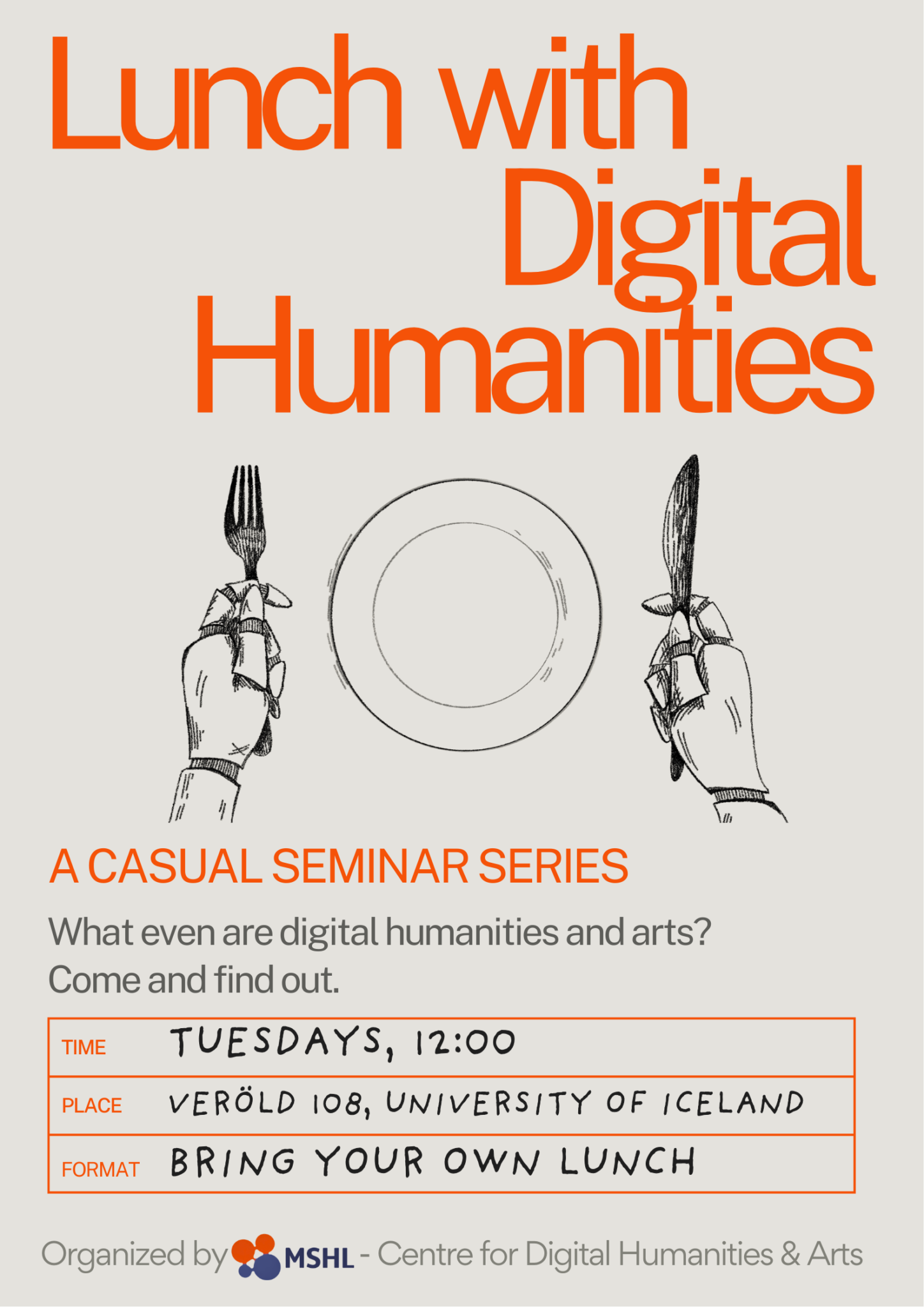
Lunch with Digital Humanities

The Centre for Digital Humanities and Arts in Iceland is pleased to announce the second iteration of its lecture series, this time bearing the title Lunch with Digital Humanities.

When:  Tuesdays, 12:00 GMT
Where:
University of Iceland, Veröld 108

This series brings together a range of experts working across digital humanities and the arts, offering informal, engaging talks designed for a broad audience. The focus is on sharing ideas and perspectives in a clear and accessible way, making the field approachable to anyone with an interest, no prior knowledge required.

Talks will also be livestreamed on MSHL’s YouTube channel, making them accessible both on-site and online.

You can find the recordings and materials from our inaugural lecture series, Digital Humanities After Hours, here.

Full schedule below.
The recording is available here.

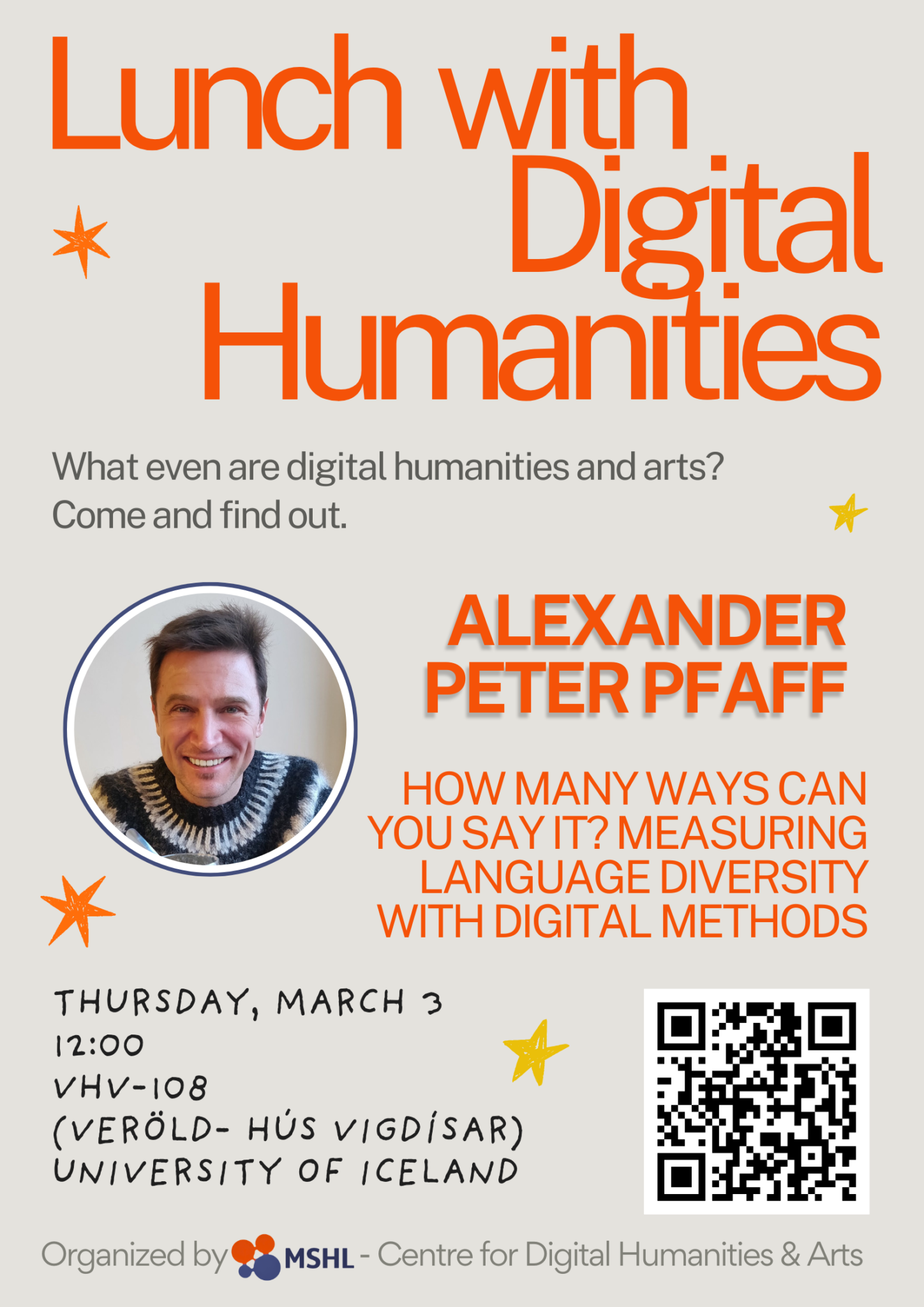
Alexander Peter Pfaff, University of Iceland
How Many Ways Can You Say It? Measuring Language Diversity with Digital Methods

Understanding how languages vary in the way they build expressions is essential for studying texts across periods and languages, yet traditional descriptions capture only a fraction of this diversity. Patternization is an approach that combines traditional text analysis and corpus linguistics with mathematical methods into a Python tool that allows us to explore such syntactic variation: it treats phrases as sequences of category labels and compares the patterns that actually appear with the full range of patterns that could appear. This task is hardly feasible if performed manually, illustrating how digital methods can reveal nuances otherwise invisible to the human eye.

The recording is available here.

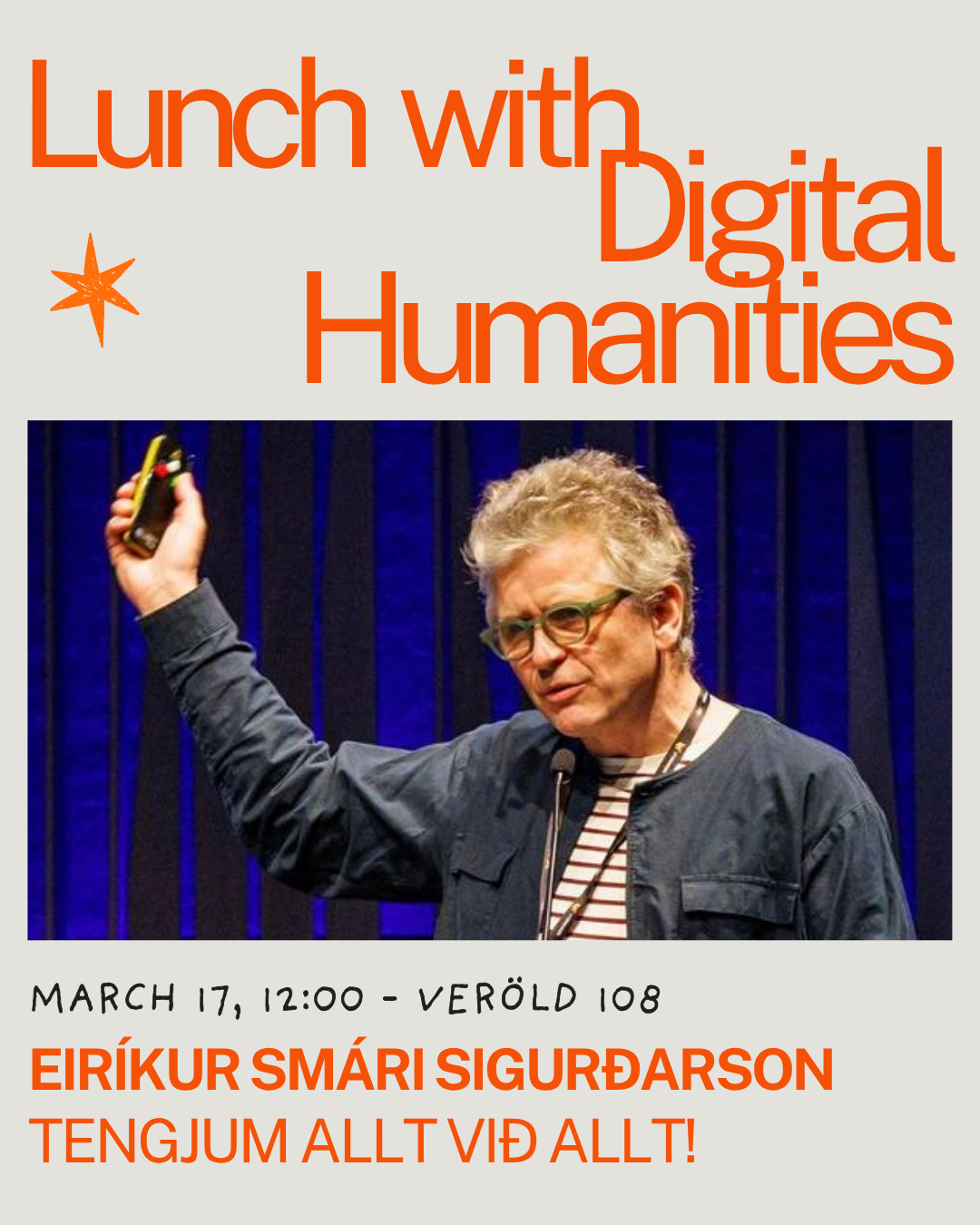
Eiríkur Smári Sigurðarson, University of Iceland, MSHL
Tengjum allt við allt!

Hvernig getum við breytt einangruðum gagnasöfnum í lifandi og samtengdan þekkingarvef? Í þessu erindi er fjallað um tækifæri sem verða til þegar menningarleg gögn eru stafræn og tengd með merkingarfræðilegri tækni. Með því að nýta aðferðafræði tengdra gagna (e. Linked Data) má rjúfa múra á milli ólíkra stofnana og verkefna, þannig að upplýsingar flæði á milli kerfa.

Með innblæstri frá hinu finnska Sampo-módeli, skoðum við hvernig hægt er að smíða stafrænt vistkerfi þar sem handrit, myndlist, örnefni og sögulegar persónur mætast í einu vistkerfi. Markmiðið er að hætta að líta á gögn sem stakar eyjar og byrja að tengja allt við allt. Við ætlum ekki bara að varðveita menninguna, heldur gera hana aðgengilega og gagnvirka.

The lecture will be livestreamed here.

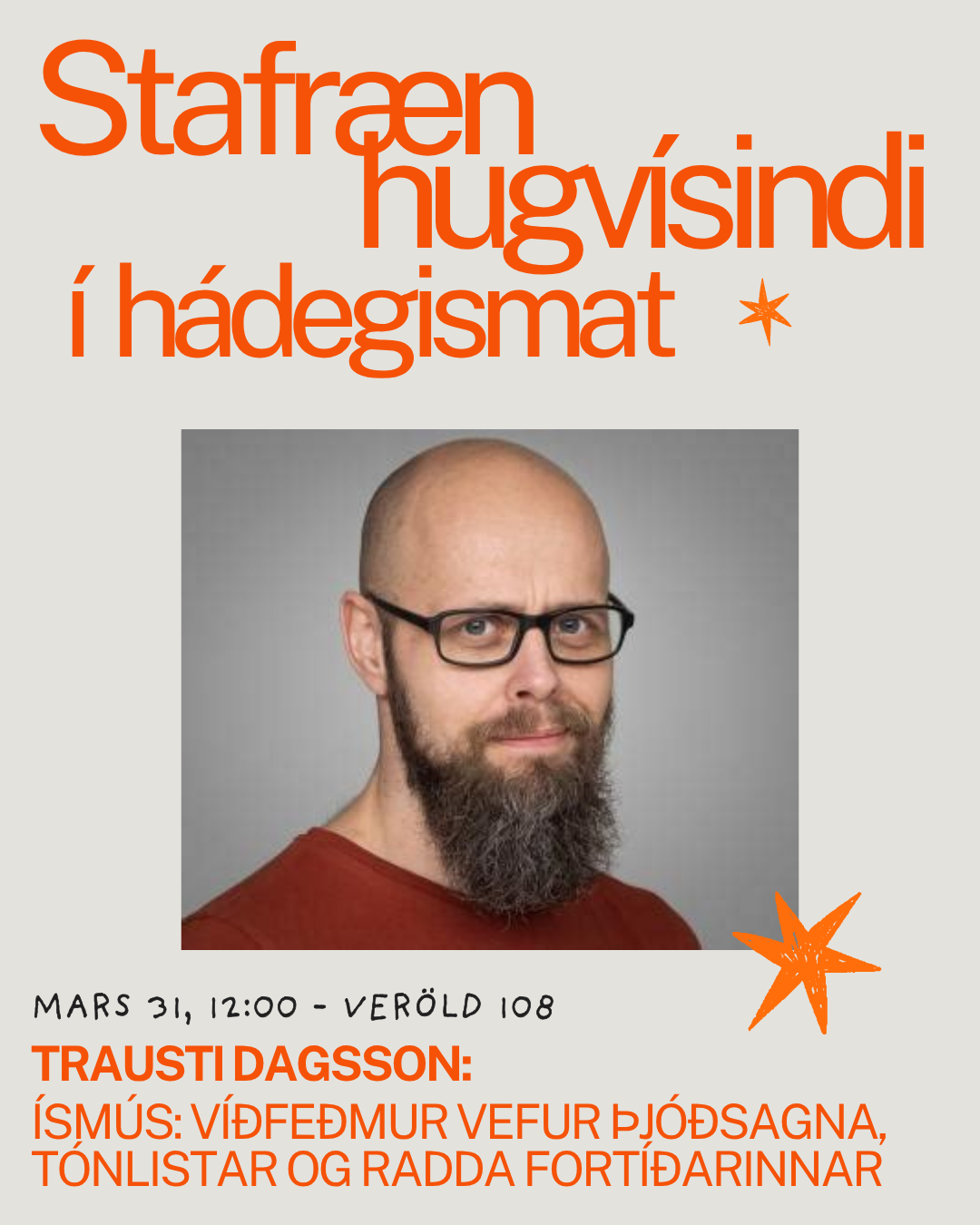
Trausti Dagsson, Árni Magnússon Institute for Icelandic Studies
Ísmús: Víðfeðmur vefur þjóðsagna, tónlistar og radda fortíðarinnar

Vefurinn Ísmús er samstarfsverkefni Árnastofnunar og Tónlistarsafns Íslands sem nú er hluti af Landsbókasafni. Á vefnum má nálgast upptökur úr þjóðfræðisafni Árnastofnunar ásamt gríðarmiklum upplýsingum um tónlistarsögu Íslands. Í fyrirlestrinum verður fjallað um hvernig önnur stór gagnasöfn hafa runnið saman við Ísmús og þannig skapað víðfeðmt yfirlit yfir þjóðfræði, sagnir, ævintýri, alþýðukveðskap, þjóðlög og hljómsveitir. Einnig verður sýnt hvernig sjálfvirkri talgreiningu var beitt á upptökur í þjóðfræðisafninu og hvernig önnur rafræn söfn tengjast Ísmús–eins og Nafnið.is, Bækur.is og Handrit.is.

The lecture will be livestreamed here.

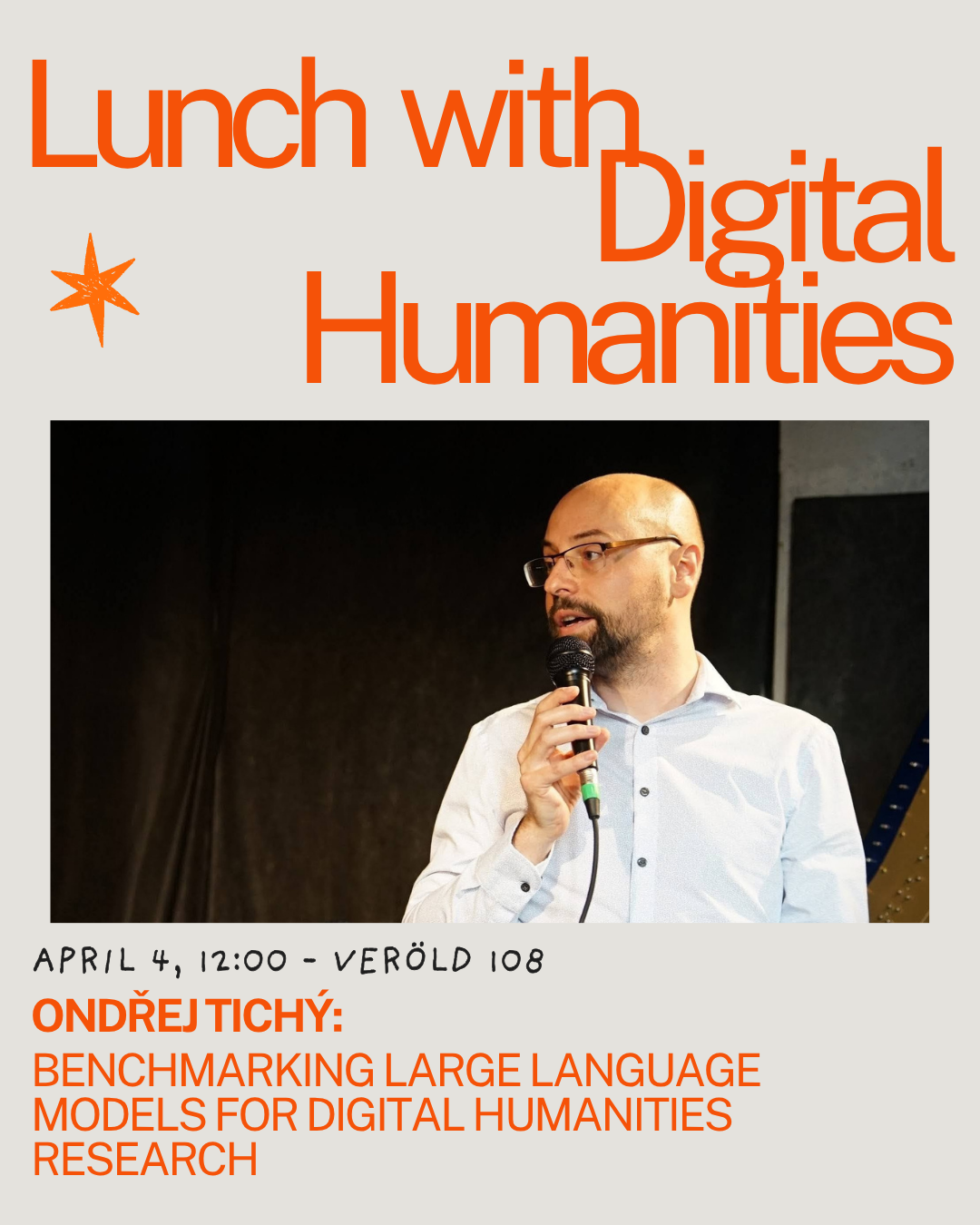
Ondřej Tichý, Charles University, Prague
Benchmarking Large Language Models for DH Research

Recent advances in Large Language Models (LLMs) have shown that they can increasingly replace traditional NLP techniques across a range of linguistic tasks, such as part-of-speech tagging or orthographic normalization, and can even approach or surpass human annotators in tasks such as speech-act classification or genre annotation. However, the results of previous studies are often difficult to replicate, given the wide range of factors influencing LLM output, its inherent stochasticity, and the breakneck lifecycle of the individual models. Consequently, state-of-the-art results, their systematic comparison and generalization remain challenging.

In this paper, I propose a set of guidelines and Python scripts designed to make benchmarking LLMs on linguistic tasks more accessible, reproducible, and comparable. I also conduct several benchmarking experiments using this methodology to validate it and to identify best practices for applying LLMs to linguistic research, as well as to determine which current models perform best in specific tasks.

The proposed guidelines define input and output data structures for a variety of linguistic tasks, recommend parameter settings (e.g. temperature, top_p, chain-of-thought reasoning, retrieval-augmented generation), and outline how to interpret outputs such as self-reported confidence scores and token-level probabilities. The accompanying scripts enable researchers to (re)run tests on new tasks or new models and to generate comparable reports. While model fine-tuning is outside the scope of our framework, we support both zero- and few-shot prompting, allowing users to provide ground-truth data for evaluation and, optionally, as few-shot examples.
In my own tests, I will focus on tasks that have not been largely solved by NLP (avoiding e.g. PoS tagging in English) and that are commonly performed by empirical and more specifically corpus linguists. While most tasks target Present-Day English, I also investigate how LLMs handle low-resource languages and non-standardized varieties by including Czech and earlier stages of English. The selected tasks range from morphological and syntactic classification (e.g. identifying nominal number in Old English or the syntactic role of non-finite verbs in Present-Day English) to pragmatic annotation (e.g. contextual functions of like), semantic disambiguation, and historical spelling normalization.

I benchmark both major commercial models (e.g. ChatGPT, Gemini, Claude) and leading open-source or smaller models (e.g. gpt-oss, LLaMA, DeepSeek, Mistral), including different quantizations and configurations (leveraging the resources of the e-infra.cz research infrastructure). This enables evaluation not only of their performance but also of factors such as cost, accessibility, and data security, as well as testing claims such as smaller models outperforming larger ones on simple binary classifications.

My preliminary findings suggest that some linguistic tasks, such as text normalization and basic morphological classification, are already well-suited to LLM applications. In contrast, more complex tasks requiring extensive context and elaborate hierarchical categorization, such as discourse and pragmatic annotation, still fall significantly short of human performance.

More information soon

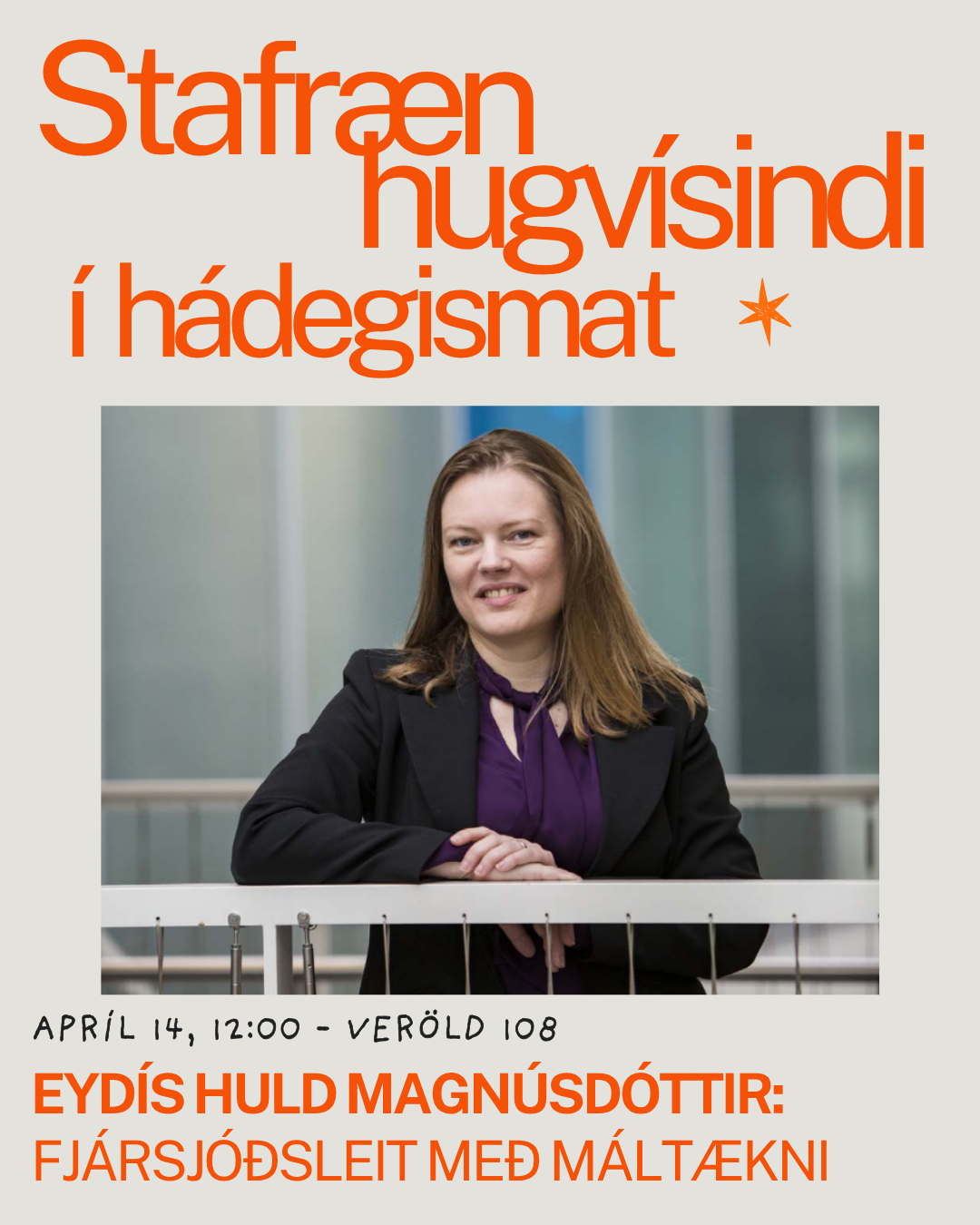
Eydís Huld Magnúsdóttir, Tiro ehf.
Fjársjóðsleit með máltækni

The lecture will be livestreamed.

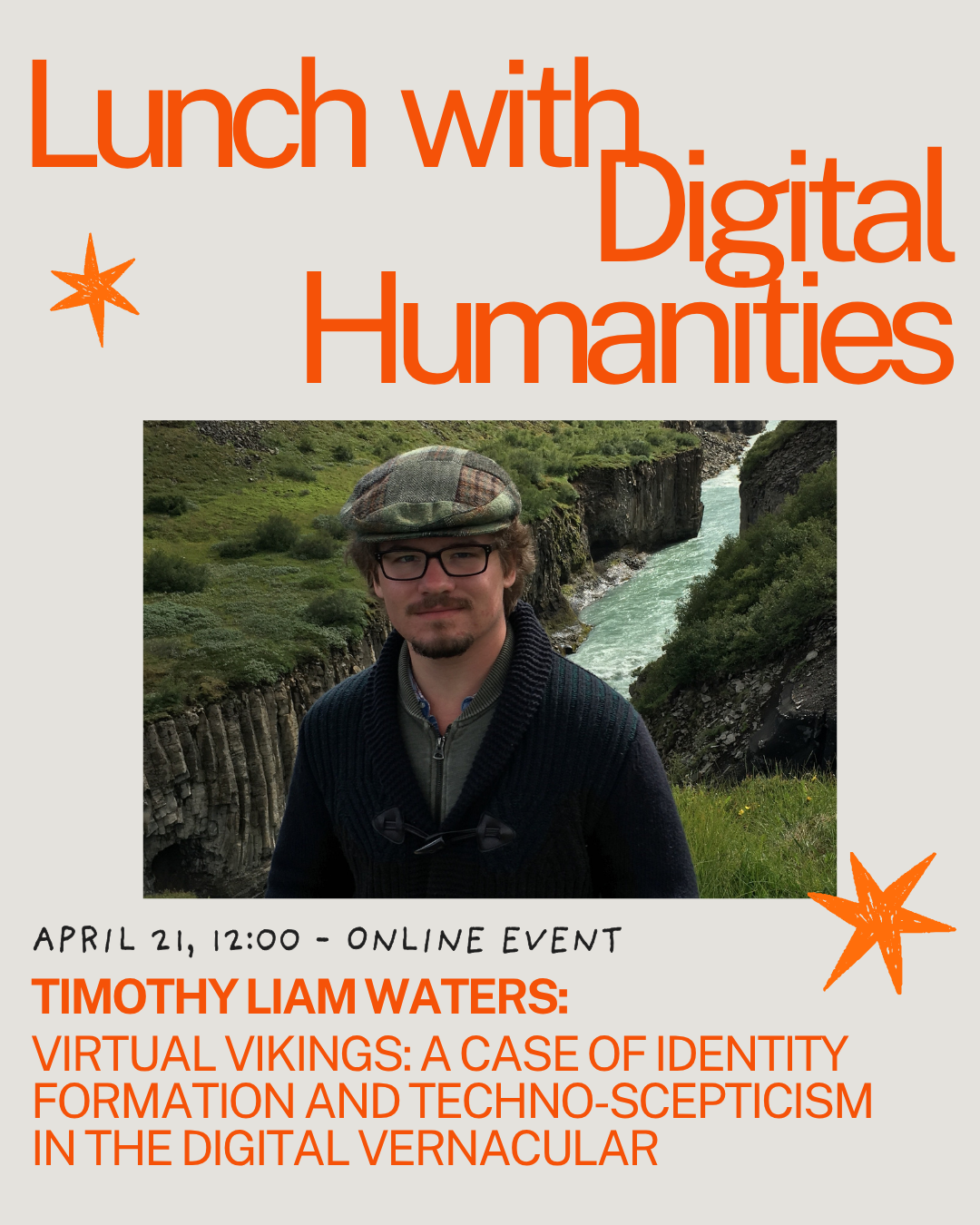
Timothy Liam Waters, Ohio State University
Virtual Vikings: A Case of Identity Formation and Techno-Skepticism in the in the Digital Vernacular

Debates about generative artificial intelligence often frame it as a threat to human creativity. This paper argues instead that AI extends a longer history of hybrid vernacular expression in digital culture. Focusing on AI-generated and AI-suspect images of the Viking Age, it examines how online communities negotiate the epistemic status of visual media. These disputes center on legitimacy rather than accuracy: what counts as authentic, what counts as AI, and who has the authority to decide. I identify three claimant groups, each advancing distinct epistemologies. Generative AI emerges as an epistemic flashpoint that destabilizes existing criteria of authenticity and reshapes how vernacular authority is produced online.

More information soon

Sigríður Regína Sigurþórsdóttir, University of Iceland & National Gallery of Iceland
Title TBA

More information soon

Hannes Högni Vilhjálmsson, Reykjavík University
Experiencing another time and place in 3D: The Historical Postal Route project

More information soon

Paola Peratello, École nationale des chartes – PSL, Paris
Title TBA
Categories
Fréttir viðburðir

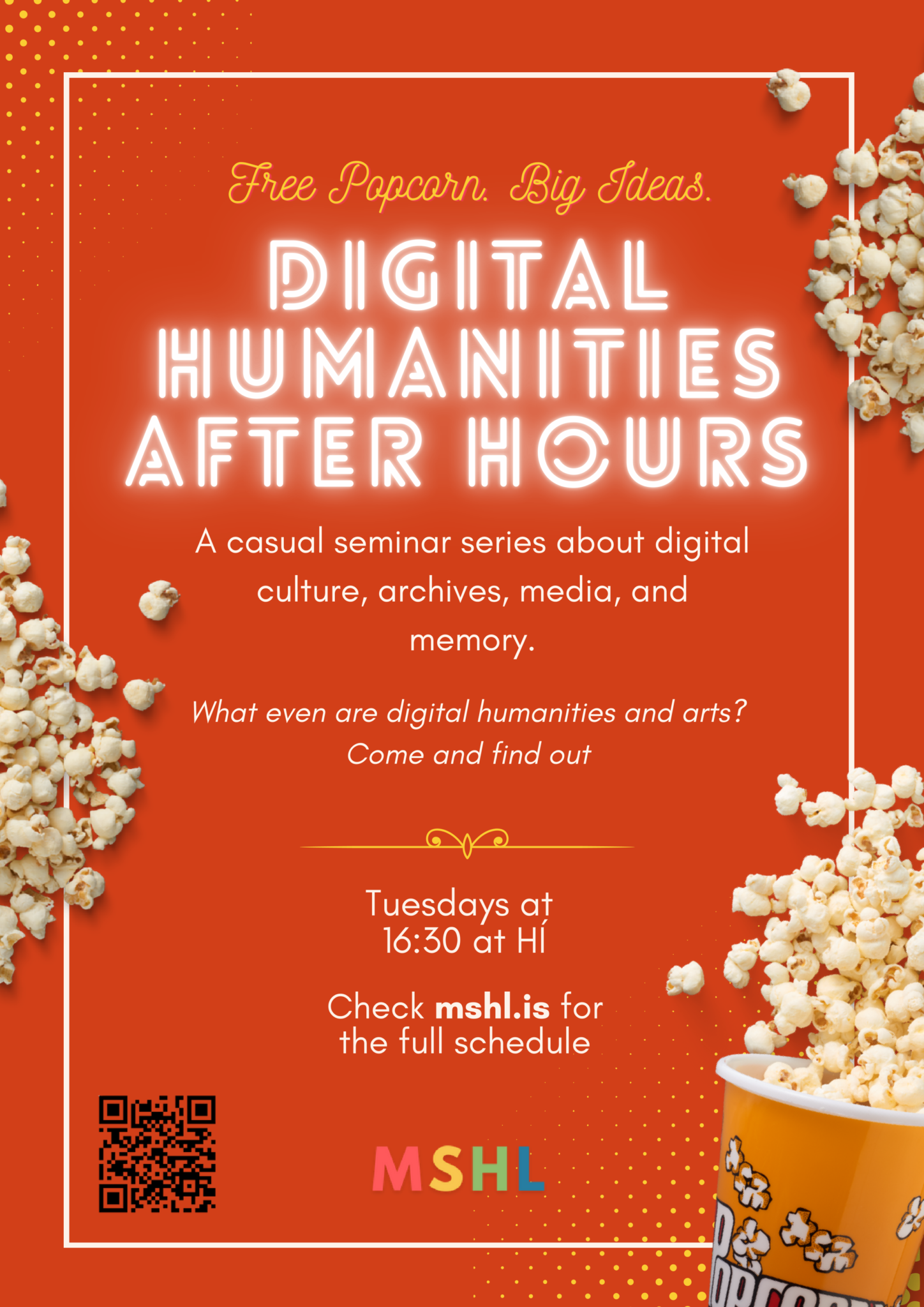
Digital Humanities After Hours

The Centre for Digital Humanities and Arts in Iceland is pleased to announce a new lecture series: Digital Humanities After Hours.

When:  Tuesdays, 16:30 GMT
Where:
 University of Iceland, Edda 209

This series brings together a range of experts working across digital humanities and the arts, offering informal, engaging talks designed for a broad audience. The focus is on sharing ideas and perspectives in a clear and accessible way, making the field approachable to anyone with an interest, no prior knowledge required.

Talks will also be livestreamed on MSHL’s YouTube channel, making them accessible both on-site and online.

Full schedule below.

Recording of the lecture: Here

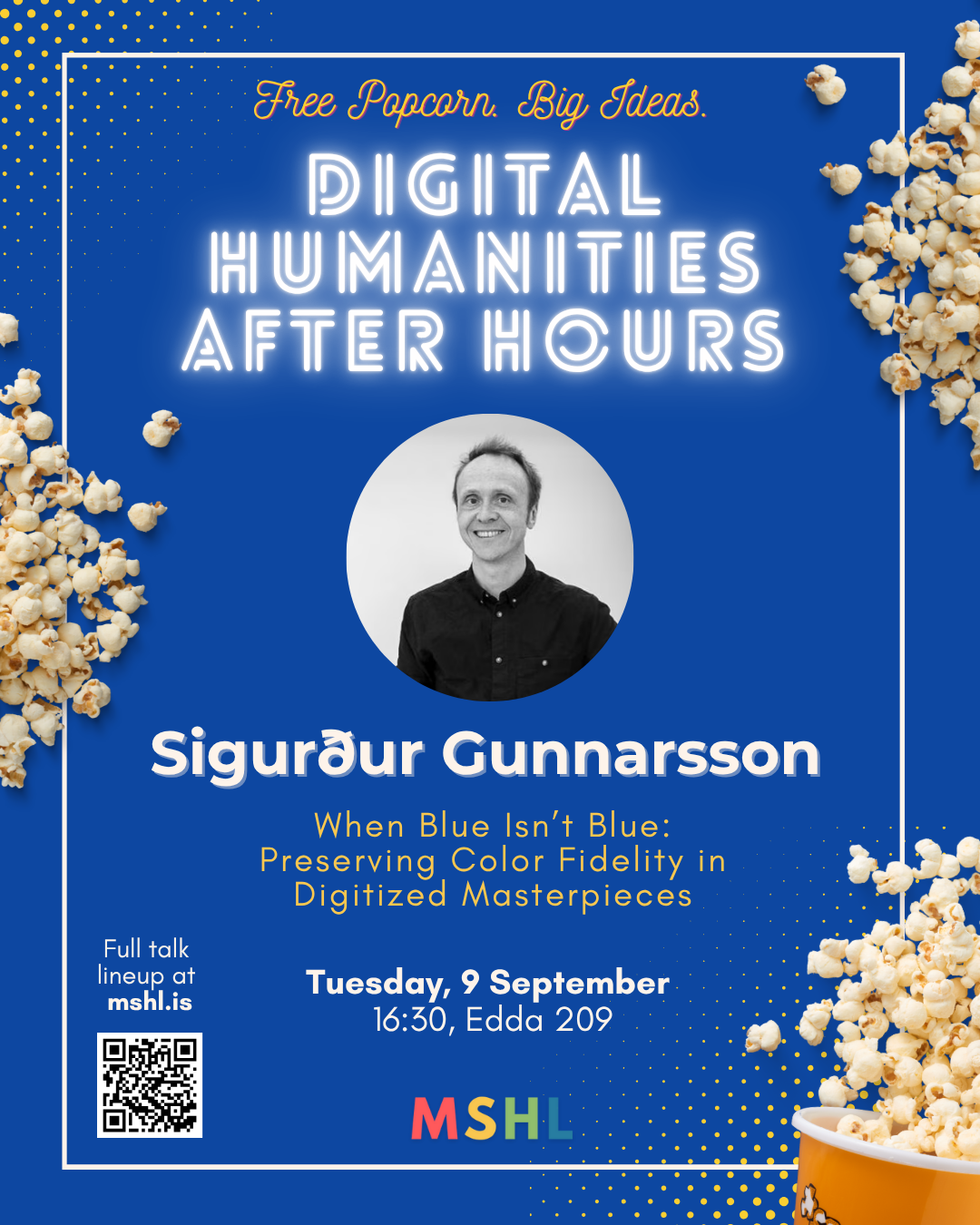
Sigurður Gunnarsson, National Gallery of Iceland
When Blue Isn’t Blue: Preserving Color Fidelity in Digitized Masterpieces

Sigurður Gunnarsson, photographer at the National Gallery of Iceland, will share the behind-the-scenes challenges of capturing artworks through photography, and how those challenges are solved. He will talk about creating faithful digital reproductions, getting colors just right, and the trusted methods and standards professionals use to make sure the artwork looks as true to life as possible.

Recording of the lecture: Here

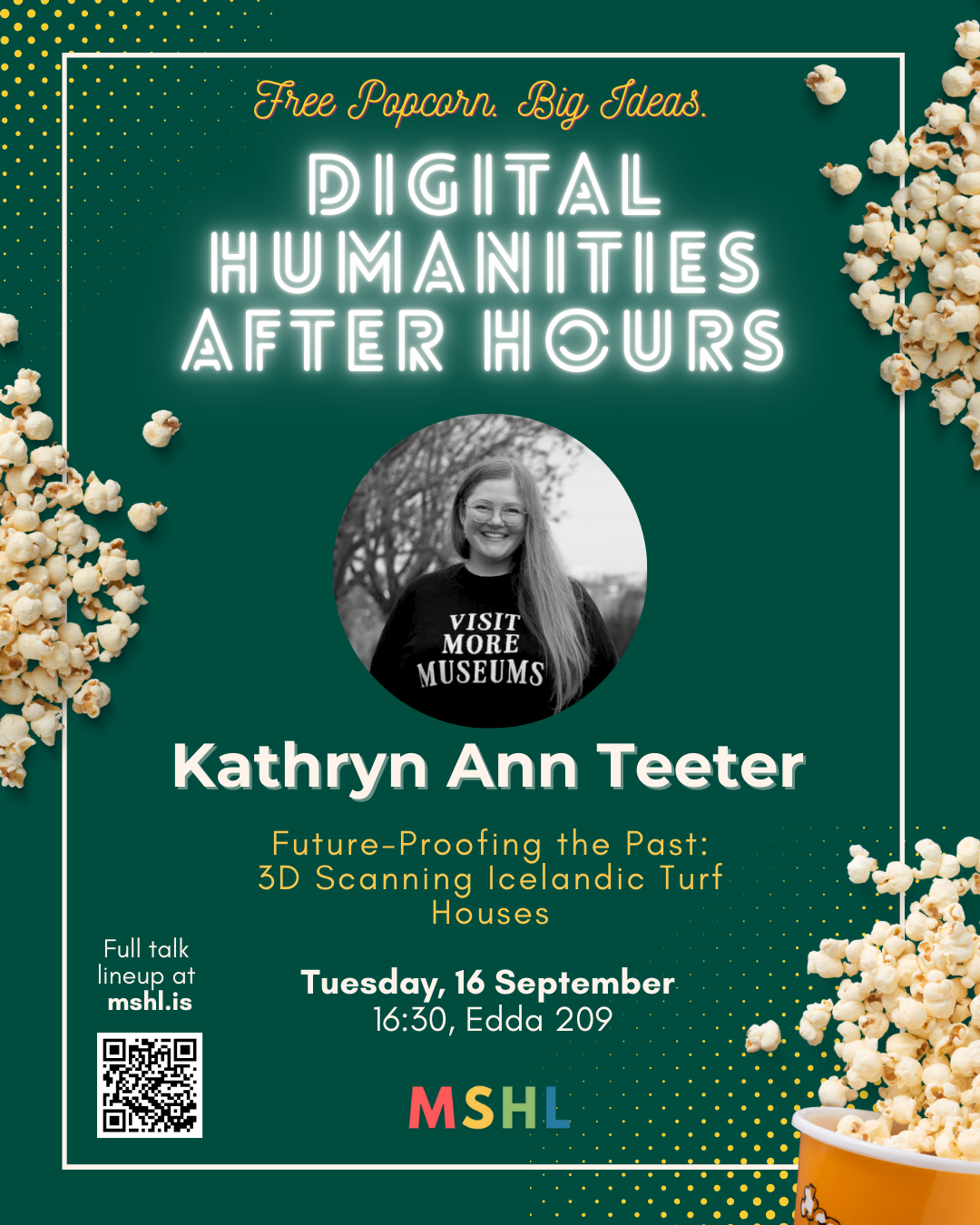
Kathryn Teeter, University of Iceland
Future-Proofing the Past: 3D Scanning Icelandic Turf Houses

The Icelandic turf house is an important part of the country’s history and cultural heritage, yet these unique buildings are increasingly at risk. To ensure the survival of the turf house for future generations, we need to improve our understanding of their structural behaviour. 3D scanning is one way that digital technologies are being combined with museum conservation to increase our knowledge and support long-term conservation efforts. 

Recording of the lecture: Here

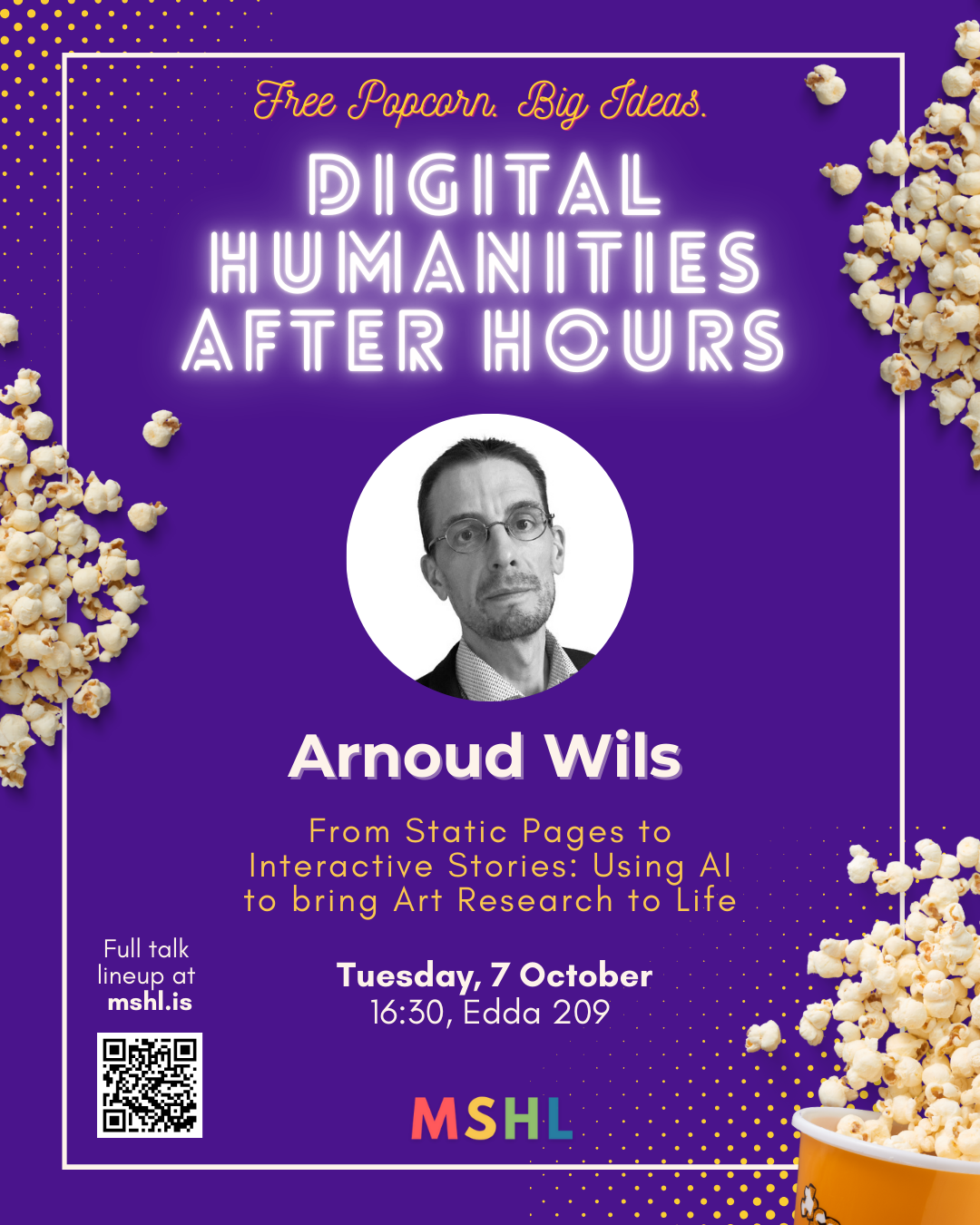
Arnoud Wils, Maastricht University
From Static Pages to Interactive Stories: Using AI to bring Art Research to Life

Large Language Models have the potential to transform scanned art catalogues into structured digital resources. This presentation uses the Corpus Rubenianum (a series of over 40 volumes on Rubens) as a case study to showcase how AI can extract bibliographic references, artwork provenance data and iconographic details from unstructured, unattractive PDFs. This data can then be transformed into compelling visualisations to foster art historical research and public engagement.

The lecture will be livestreamed: Here

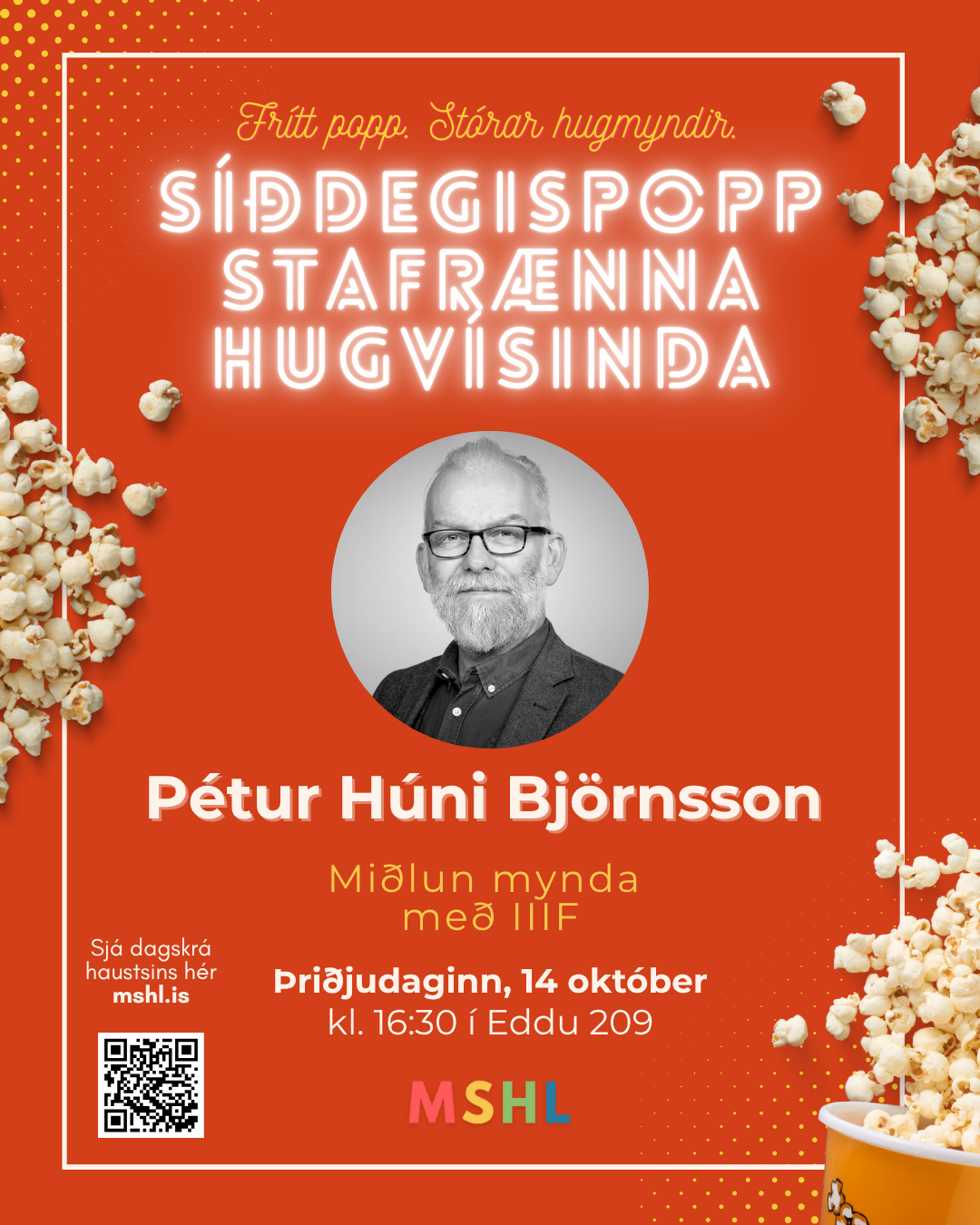
Pétur Húni Björnsson, University of Copenhagen
Miðlun mynda með IIIF

Ég ætla að spjalla um IIIF staðalinn og sýna dæmi um hvernig ég hef nýtt hann til miðlunar mikils magns mynda í verkefnum mínum. Innleiðing staðalsins krefst ýmissa verkfæra til þess að tilreiða myndir, miðla þeim og birta. Það reyndist fremur snúið að koma öllu heim og saman og krafðist mikillar yfirlegu, en eftir að yfir þann upphafshjalla var komið hefur sýnt sig að það var ferðarinnar virði.

The lecture will be livestreamed: Here

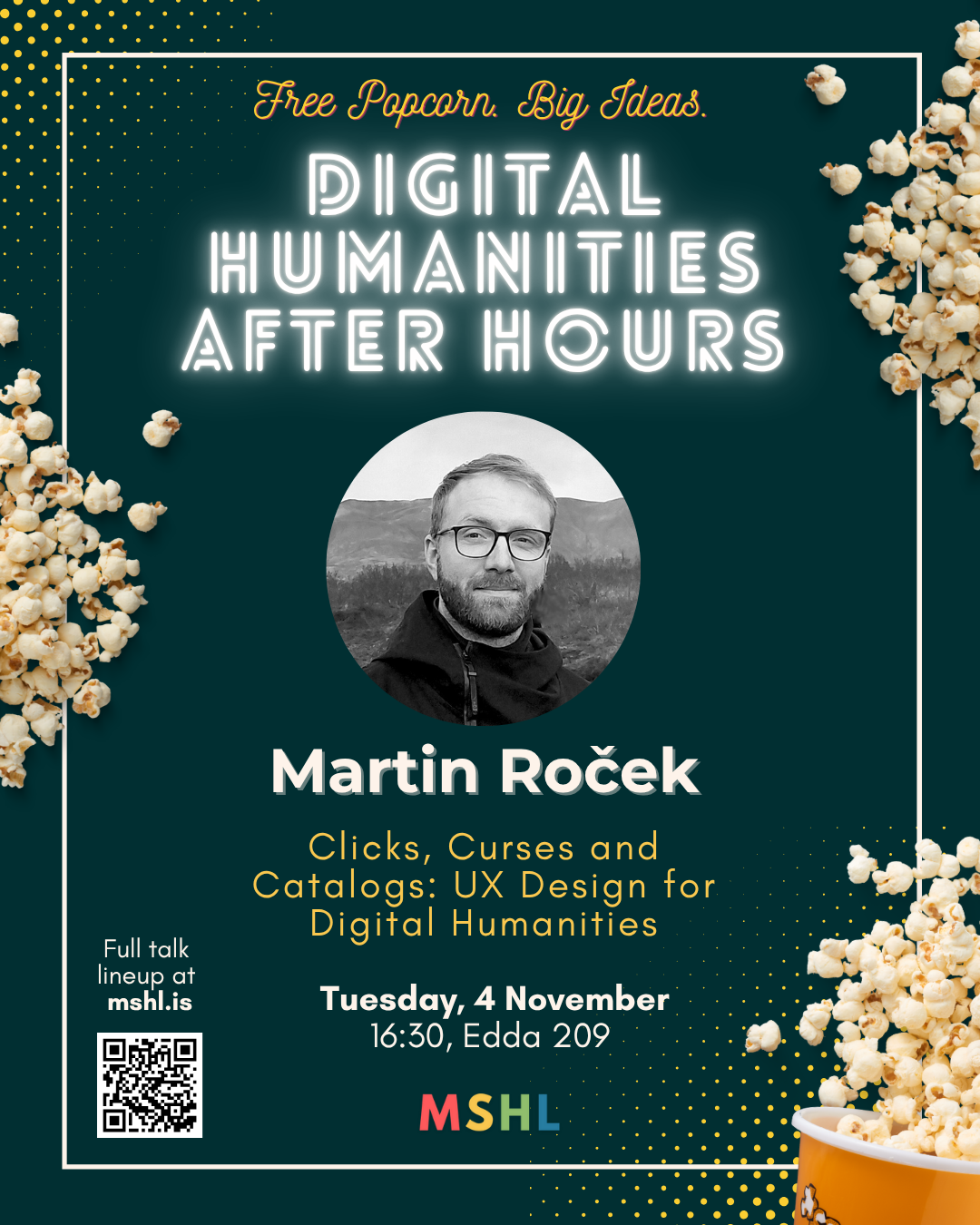
Martin Roček, Charles University & IMAFO, Austrian Academy of Sciences
Clicks, Curses and Catalogs: UX Design for Digital Humanities

The design of a digital tool, such as a database or dictionary, does more than simply provide access to information; it also guides interpretation. This talk explores this dynamic through the lens of user experience (UX). The first part will review several practical methods for improving the usability of scholarly digital resources. The second part will adopt a more critical perspective, asking how interface design itself can be understood as a form of scholarly argument that influences research outcomes. Finally, the talk seeks to connect the practical work of building digital tools with a necessary critical reflection on their impact.

The lecture will be livestreamed: Here

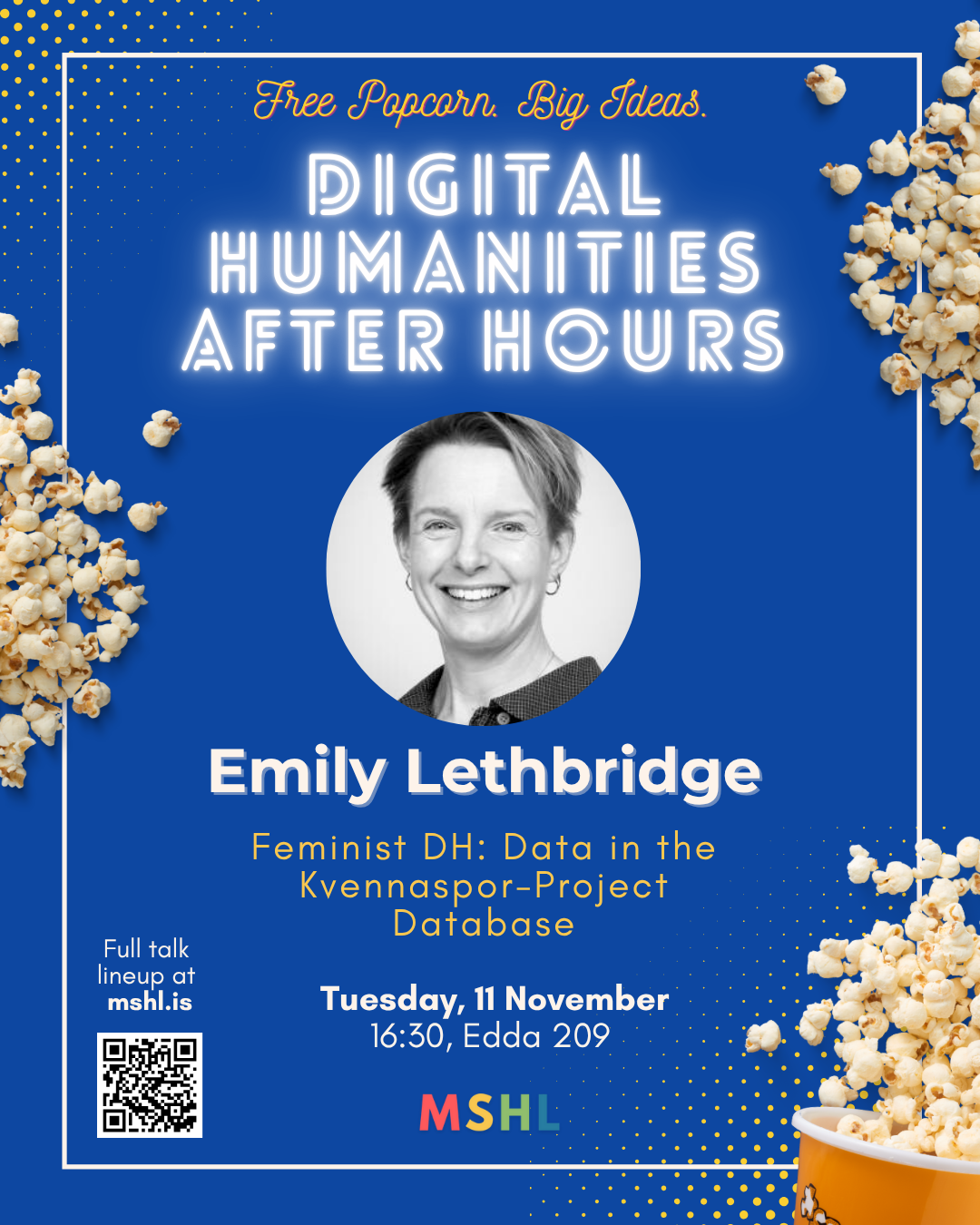
Emily Lethbridge, Árni Magnússon Institute for Icelandic Studies
Feminist DH: Data in the Kvennaspor-Project Database

The research project Kvennaspor: Unearthing and Foregrounding Women in Icelandic Saga Landscapes was funded by Rannís in 2023. Focusing on (1) how women are represented in landscape contexts in medieval Icelandic narrative sources (especially Íslendingasögur), and (2) 19th- and 20th-century accounts of travel to Iceland by women, the project highlights ways that women have been marginalised and even written out of landscape contexts over time. Data collection is a core part of research and the project’s academic and creative outputs build directly on this foundational work. From a feminist DH perspective, the project database contributes to other efforts to foreground forgotten and sidelined women, redressing the historical imbalance and chiming with bigger discourses about how biases of various kinds shape society, with the result that some stories gain dominance at the expense of others. As well as discussing the broader theoretical framing of our database work, and providing a brief “behind-the-scenes” tour, I will reflect on how this project database has grown out (and utilises) data from other DH projects, notably Icelandic Saga Map and Nafnið.is.

The lecture will be livestreamed: Here

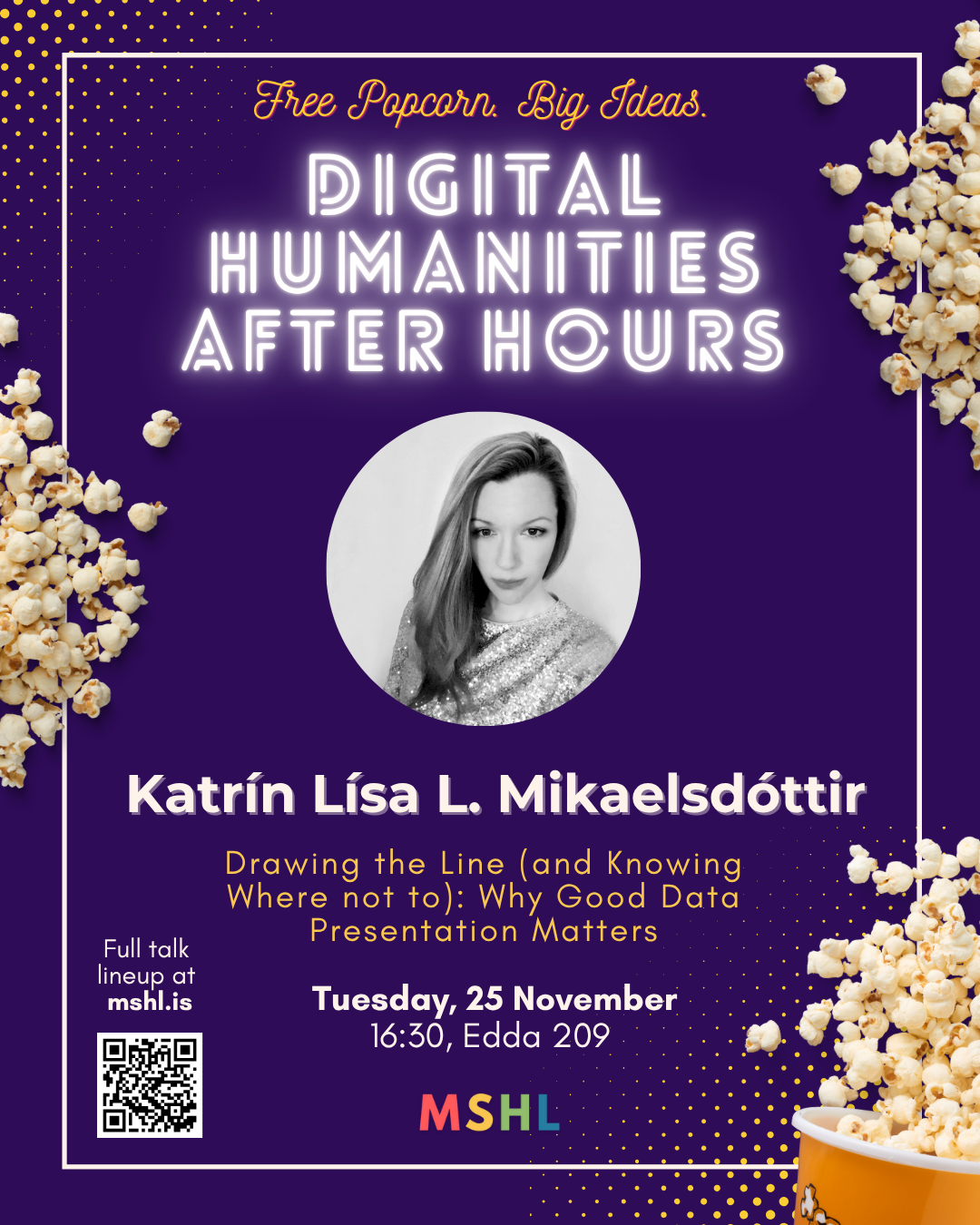
Katrín Lísa L. Mikaelsdóttir, Centre for Digital Humanities and Arts, Reykjavík
Drawing the Line (and Knowing Where not to): Why Good Data Presentation Matters

What is “good” information presentation and why does it matter? I argue that responsible data visualisation is not only a method or a technical skill, but a fundamentally humanistic act, one that requires the same interpretive judgement we apply to texts, images, and cultural artefacts. This talk foregrounds the role of humanistic reasoning in visualisation by presenting the shared core principles that govern clear, meaningful and responsible graphical representation. I will examine the interpretive work embedded in visual design, how choices of form, scale, visual hierarchy, colours, and narrative shape what becomes legible, memorable, or (in)visible. Building on this, I offer practical guidance for creating visualisations that clarify without oversimplifying, communicate without distorting, and make their interpretive decisions explicit. I contend that (digital) humanists are not just capable of doing visualisation well, they are urgently needed in conversations about how data is presented and understood, as they are equipped to do it well bringing critical literacy, contextual thinking, ethical awareness, and an understanding of how meaning is conveyed or distorted through representation to an increasingly data-driven world.

The lecture will be livestreamed: Here

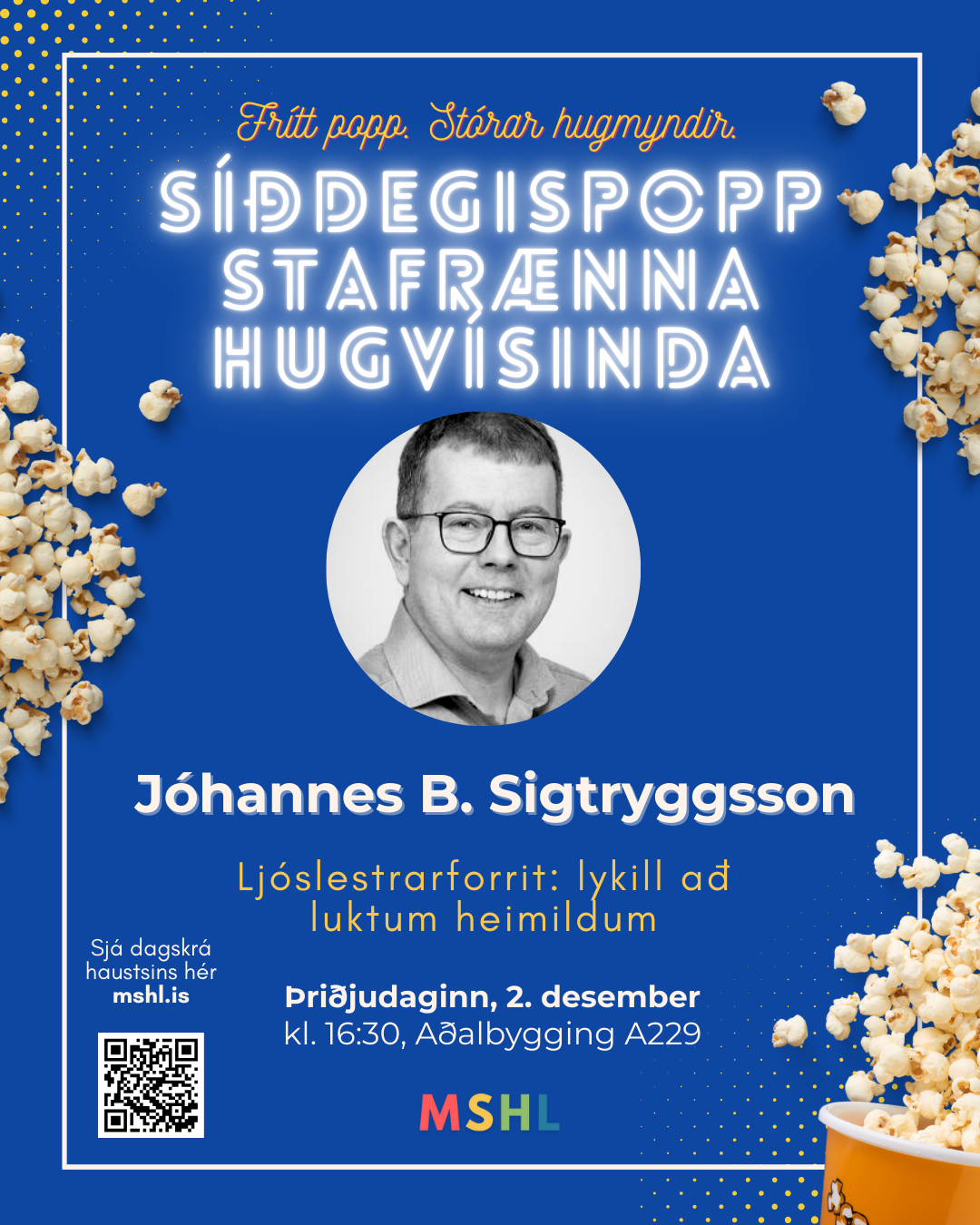
Jóhannes B. Sigtryggsson, Árni Magnússon Institute for Icelandic Studies
Ljóslestrarforrit: lykill að luktum heimildum

Ljóslestur (OCR, optical character recognition) er tækni sem hefur fleygt fram á síðustu árum og hefur gervigreind bæst við sem hjálpartól við hana nýlega. Ljóslestrarforrit eins og Transkribus hafa verið notuð við uppskriftir handskrifaðs texta og meðal annars hér á landi en einnig önnur forrit eins og Google Vision til að lesa úr prentuðu efni. Í verkefninu Málheild síðari alda (MSA) sem nú stendur yfir eru bæði þessi forrit nýtt og mun ég segja frá reynslu okkar af þeim. Verkefnið er styrkt af Innviðasjóði í gegnum Miðstöð stafrænna hugvísinda og lista.

The lecture will be livestreamed: Here

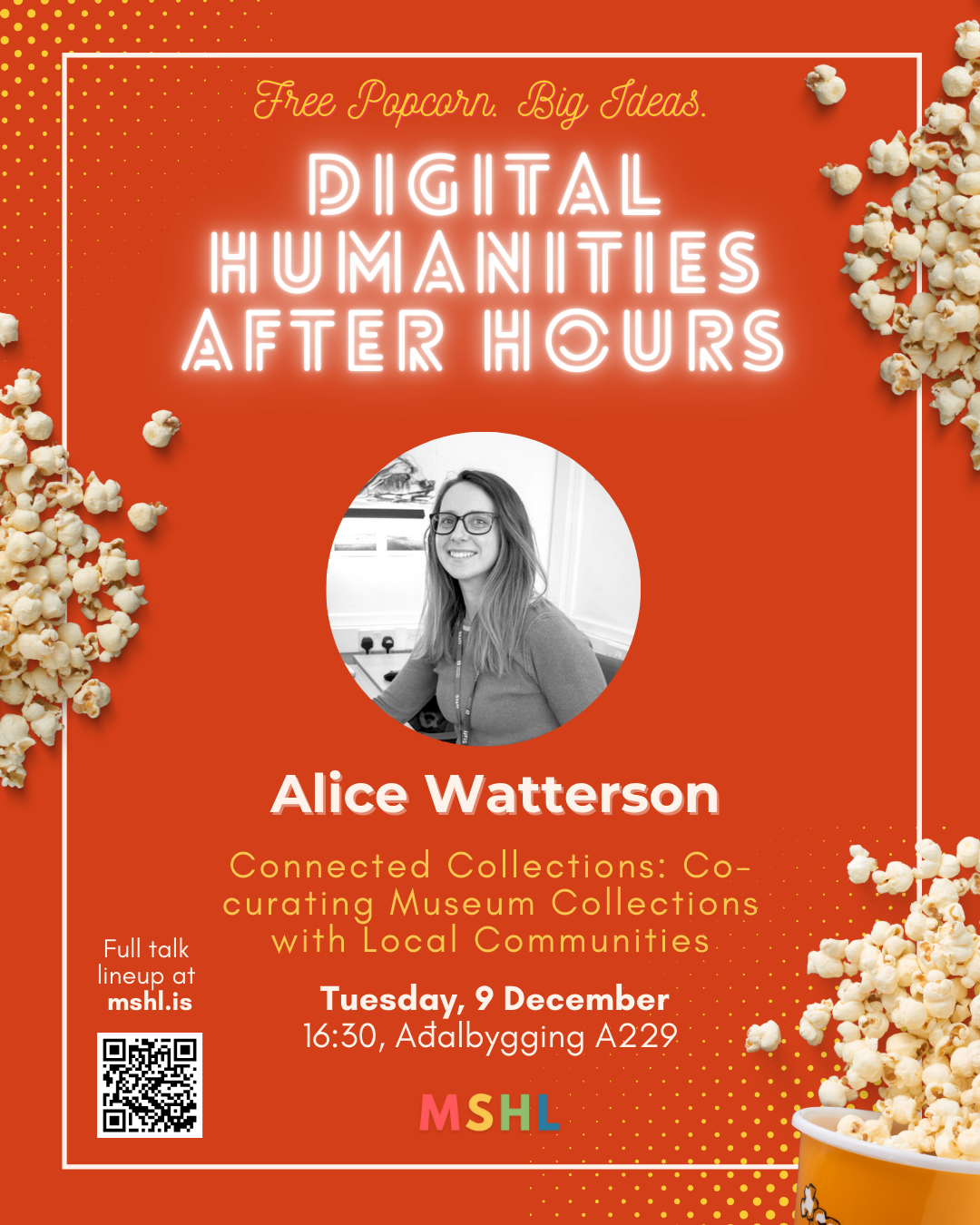
Alice Watterson, Hornafjörður Research Center, University of Iceland
Connected Collections: Co-curating Museum Collections with Local Communities

Local voices can play an important role in the interpretation and communication of museum collections, especially in the Arctic where Indigenous knowledge brings invaluable perspectives to our shared understanding of the past. This talk will discuss case studies from digital outreach projects in Nunavut, Alaska and Greenland designing interactive resources for schools, museums and the general public. These resources bring together a range of media, including 3D scanning and modelling, animation, illustration and short film production, co-curated with local communities.

The lecture will be livestreamed: Here

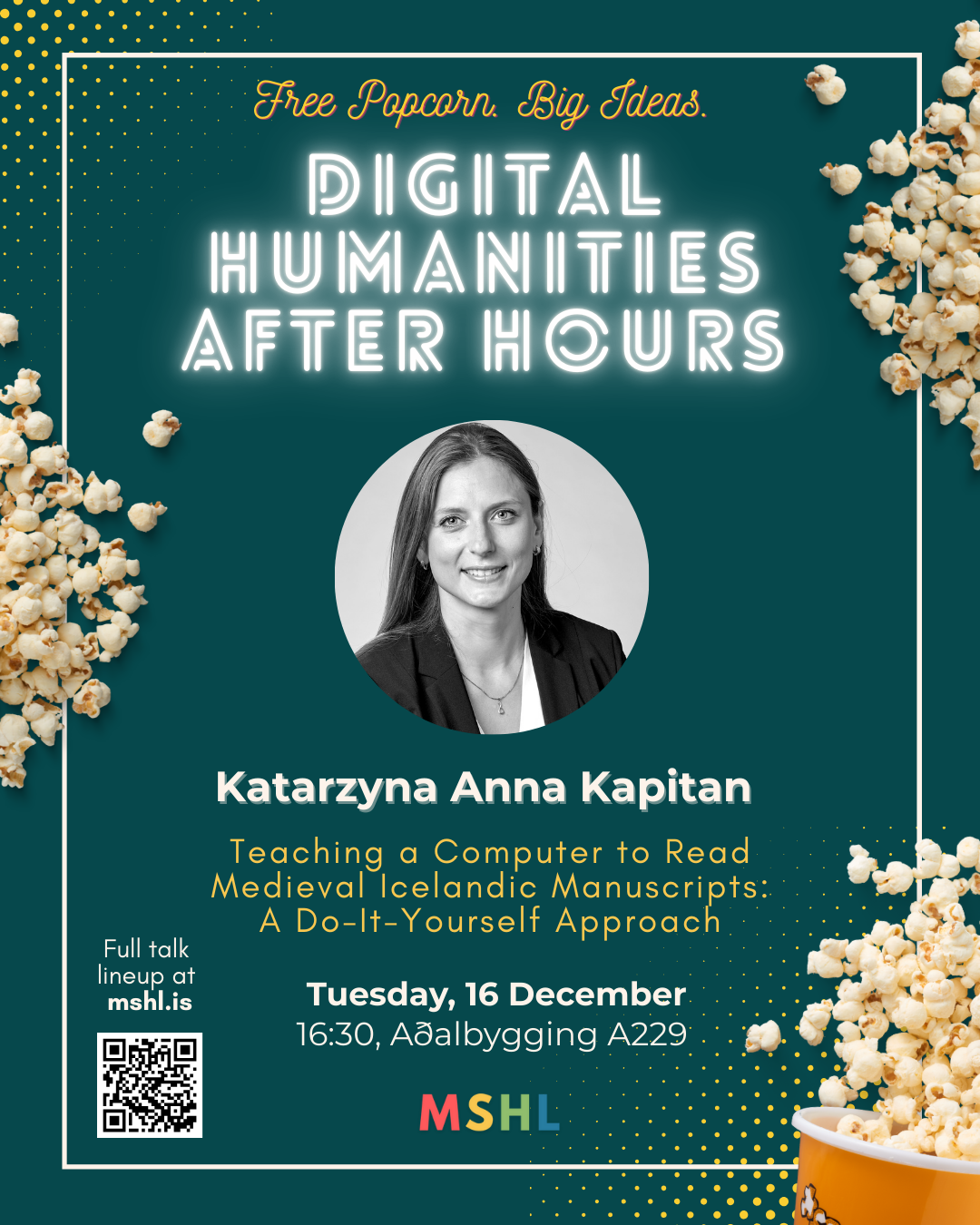
Katarzyna A. Kapitan, Paris Sciences et Lettres University
Teaching a Computer to Read Medieval Icelandic Manuscripts: A Do-It-Yourself Approach

This paper presents initial results from a project aiming to develop the first open-access FAIR ATR model for medieval Old Norse-Icelandic manuscripts. Using only a small number of training pages to fine-tune the CATMuS-medieval model, we achieved clear improvements in both in-domain and out-of-domain accuracy. These results demonstrate that effective models can be created with minimal data and without expensive hardware, as all experiments were carried out on a standard laptop.

In my talk, I will address the challenge posed by the limited availability of training data and introduce a workflow that enables low-cost fine-tuning of existing generic models for specific research purposes. By analysing the main types of recognition errors—particularly those involving special characters central to Old Norse palaeography—I will discuss the implications for current transcription practices and the challenge of reconciling differing editorial conventions in the field.

×