
A four-day winter school on artistic and digital humanities research methods and curation for digital data 27-30 October – Reykjavík, Iceland.
Applications close 21 September.
When artists and researchers use AI, they face a twofold question: which model to run, and what data goes into it.
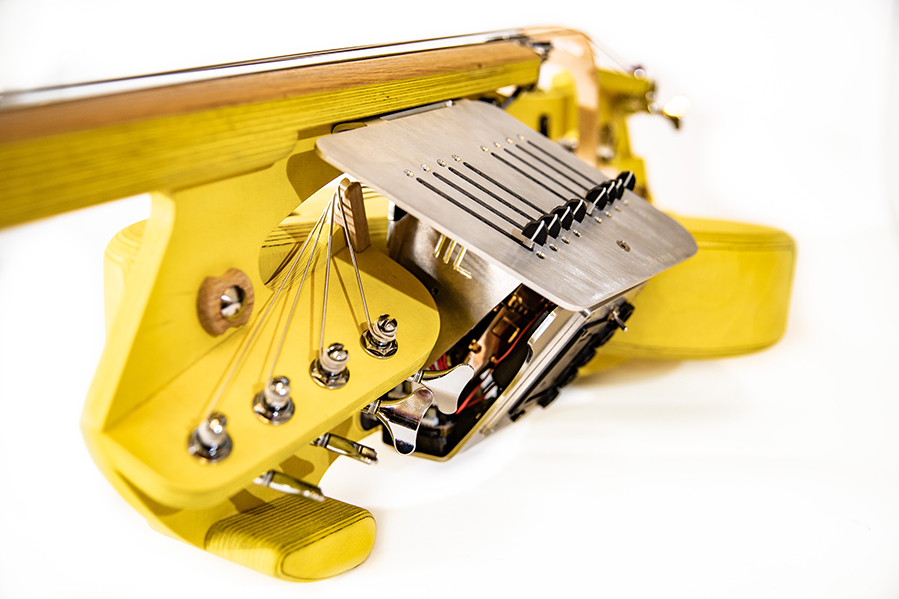
This winter school starts with instruments you can play. On the first day, several instruments run different AI models trained on one and the same dataset — so that what you hear and feel is the work of the architecture rather than of the material.
From there the week works backwards. Over the following day and a half, participants make their own data on site: recording, organising and curating datasets from scratch across sound, text and notation, then following that material into a model. The week opens out to artists using these tools in their own practice, and finishes at the National Gallery of Iceland asking how any of this work survives.
The premise is that similar data can produce different results depending on data processing, architecture, and training process — and that artistic practice has a long, rigorous tradition of taking that difference seriously.
No prior coding experience is required. All AI tools are open source, and anything we run is run step by step with instruction.
The school is aimed at artistic researchers, researchers in the digital humanities, and cultural heritage professionals working with time-based or digital media at an early career stage (PhD or postdoc level).
The four days
Day 1 — Data, Models Interfaces: a Complex Entanglement Intelligent Instruments Lab, University of Iceland. We begin with instruments that already work. Participants play with pre-trained models and sensor-based interfaces, developing a feel for how these systems respond, where they surprise, and where they fail. All interfaces and models will be trained on the same dataset. This way, how each algorithm affects the interaction will become apparent. The day sets up the question that drives the rest of the week: why does this instrument behave the way it does? Led by Nicola Privato.
Days 2–3 (morning) — Sonify Your Thoughts: Dataset Creation Lab Iceland University of the Arts. A day and a half on the material that shapes everything else. Participants record, organise and curate datasets of their own, working across sound, text and notation, and use Google Colab to see how data is prepared and fed into a model. The emphasis is on judgement — what to include, what to leave out, and what each decision does downstream. Led by Majella Clarke.
Day 3 (afternoon) — Open Studio: Artists Working with AI Iceland University of the Arts. A looser, conversational session with artists using digital tools and AI in their own practice. Less instruction, more exchange: what these methods look like inside a working practice, what they cost, and what they make possible.
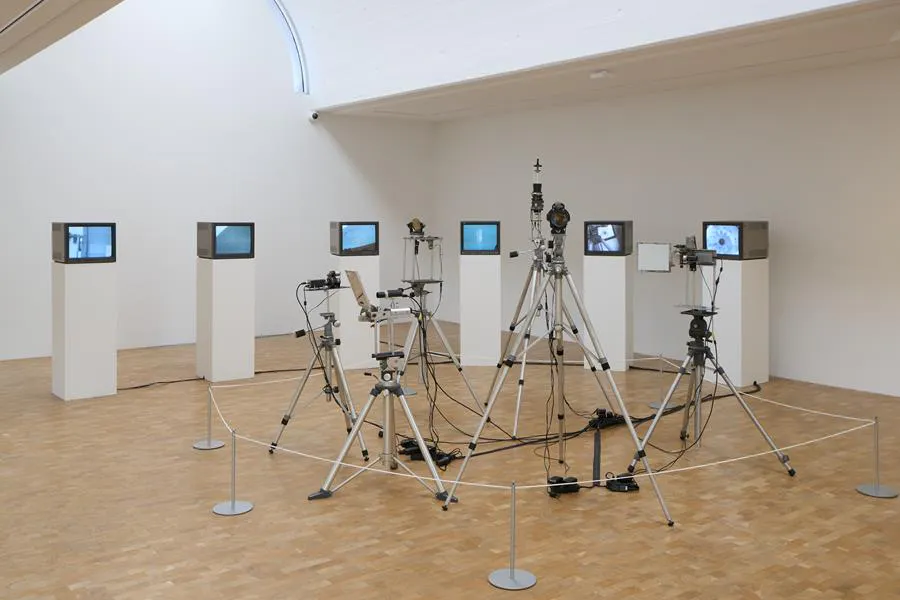
Day 4 — Archives as Hybrid Spaces National Gallery of Iceland. How does work that is temporal, processual and technology-dependent survive? Drawing on the National Gallery’s CUSP project and the Vasulka archive, the day covers preservation, curation, publication and re-exhibition — and asks participants to apply the same questions to what they made during the week. Led by Sigríður Regína Sigurþórsdóttir.
Learning outcomes
By the end of the school, participants will be able to:
- Describe how a trained model behaves in use and identify where its responses reflect choices made in its training data.
- Explain why dataset construction differs with different AI architectures.
- Record, organise and curate a dataset suitable for use with a generative model.
- Follow and interpret a prepared Google Colab workflow for dataset preparation, without prior coding experience.
- Justify inclusion and exclusion decisions in dataset curation, and describe their likely downstream effects.
- Discuss critically how dataset composition shapes model behaviour, including the propagation of bias and unintended aesthetics.
- Describe current approaches to preserving, curating and re-exhibiting time-based and technology-dependent works.
- Identify appropriate platforms for publishing and sharing practice-based research, including the Research Catalogue, the SSH Open Marketplace and DARIAH Campus.
Practical information
Who should apply: Early-career researchers (PhD and postdoctoral) in artistic research, digital humanities, and cultural heritage professionals working with digital or time-based media.
Requirements: A laptop and basic computer literacy. No coding experience needed. No musical training needed.
Cost: There is no participation fee. All lunches and refreshments are provided. A limited number of travel bursaries are available upon application (€500). Priority will be given to applicants from ITC countries and to early-career researchers who would otherwise be unable to attend. Selection will be based on geographic diversity, career stage, and the applicant’s proposed use of the training in their research. Please note this is a contribution, not full coverage — flights to Reykjavík and accommodation will exceed this, and participants should plan for additional costs or seek support from their home institution.
Places: 15.
How to apply: Fill out the Application form. Applications close 21 September. Please include a short statement (max 300 words) describing your research and what you would bring or hope to take away. Applicants will be notified on Friday September 25th.
Background
The winter school is based on knowledge and experience gained by the Icelandic partners in ongoing or recently finished international projects and networks. These are the ERC funded Intelligent Instruments, the COST network Artistic Intelligence and the Creative Europe funded project Creative Understanding, Saving and Preserving Time Based Media Art.
Funders and partners
Supported by the DARIAH Digital Arts and Humanities Training and Summer School Small Grants Call 2026.
Organised by the Centre for Digital Humanities and Arts, the Intelligent Instruments Lab (University of Iceland), the Iceland University of the Arts, and the National Gallery of Iceland.